
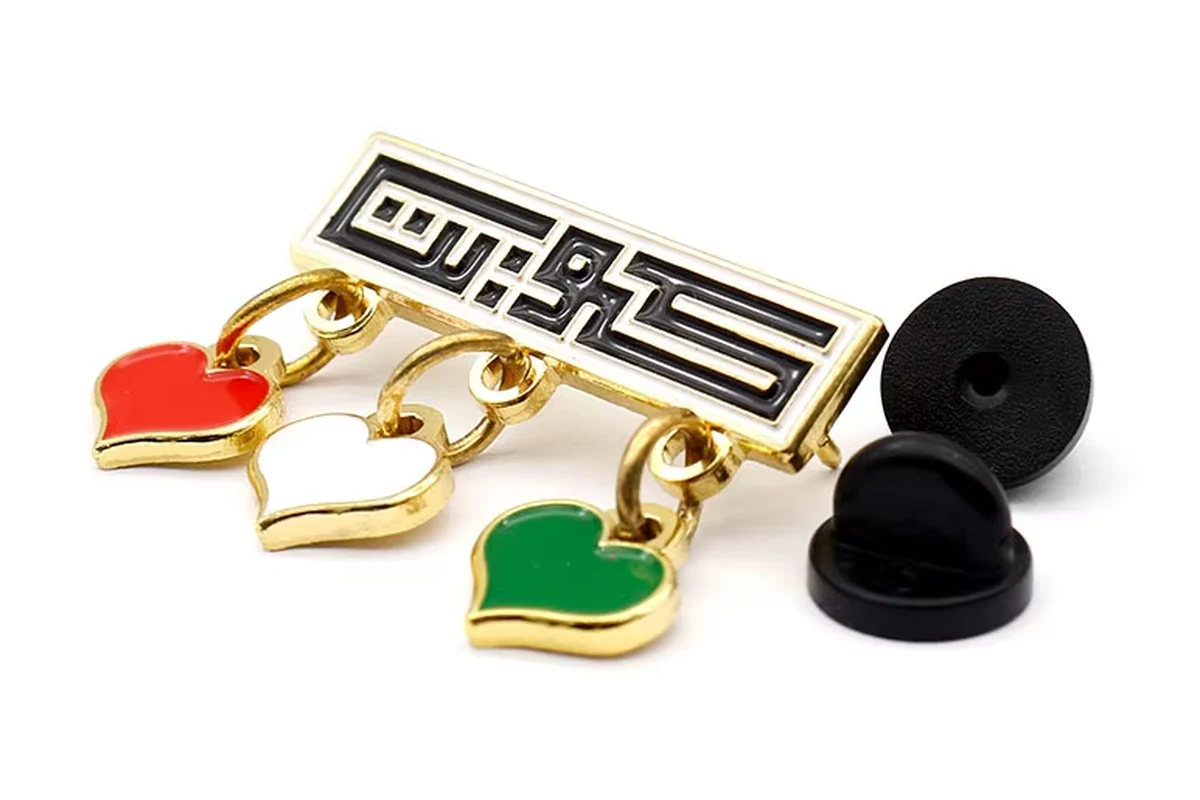
Approve a custom pin sample only after comparing it with the correct artwork revision and written specifications, checking the finished piece, and closing any unresolved changes. A sample becomes a useful production reference when both sides understand exactly which design, dimensions, finish, attachment and packaging you have approved.
“Looks good” can leave important questions open. Was that comment about the front photograph, the actual sample in your hand, or the complete order? Did the sample include the final backing card? Was a later email requesting a different finish incorporated?
The following method helps a buyer turn a sample review into a clear decision. It is a purchasing checklist, not a laboratory test method or a claim that one sample proves the quality of every piece in a bulk order.
Establish What the Sample Is Meant to Represent
Before inspecting the badge, ask what you have received. A reference sample from another design can demonstrate a general surface or attachment style. It cannot approve your own lettering, dimensions or color arrangement. A custom sample is more relevant, but you should still identify any details that differ from the intended order.
Record the sample identifier, artwork revision and date received in your project folder. Ask whether its material, manufacturing method, finish, attachment and packaging are the versions proposed for bulk production. Mark substitutions explicitly.
| Approval item | Useful evidence | What remains to confirm |
|---|---|---|
| Spelling, layout and color placement | Current artwork proof and sample | Whether the sample follows the final revision |
| Finished size and shape | Physical sample and labeled dimensions | Agreed measurement basis and any dimensional requirements |
| Surface and metal appearance | Physical sample under consistent viewing conditions | Exact finish description and accepted reference |
| Attachment and orientation | Rear view plus handling the complete sample | Final attachment type, number and position |
| Retail or gift presentation | Badge assembled with the proposed packaging | Whether that packaging is included in the order specification |
| Material or required compliance | Written specification and any specifically agreed documentation | Whether the requested evidence covers this product and requirement |
A finish name or photograph does not establish material composition, coating thickness or a test result. Raise those requirements before the order is quoted so the supplier can confirm what can be provided.
Give the Artwork Proof and Physical Sample Different Jobs
The artwork proof is the place to confirm the intended design: the exact words, outline, color assignments, dimensions and attachment notes. Check it at the proposed finished size as well as enlarged. Enlargement helps locate an error; an actual-size view helps judge whether the design communicates clearly.
The physical sample shows how that intention translates into a manufactured object. Look at the real text, edges, surface, metal finish and attachment together. A smooth screen rendering cannot demonstrate the tactile surface of a finished pin or how it sits on the intended presentation card.
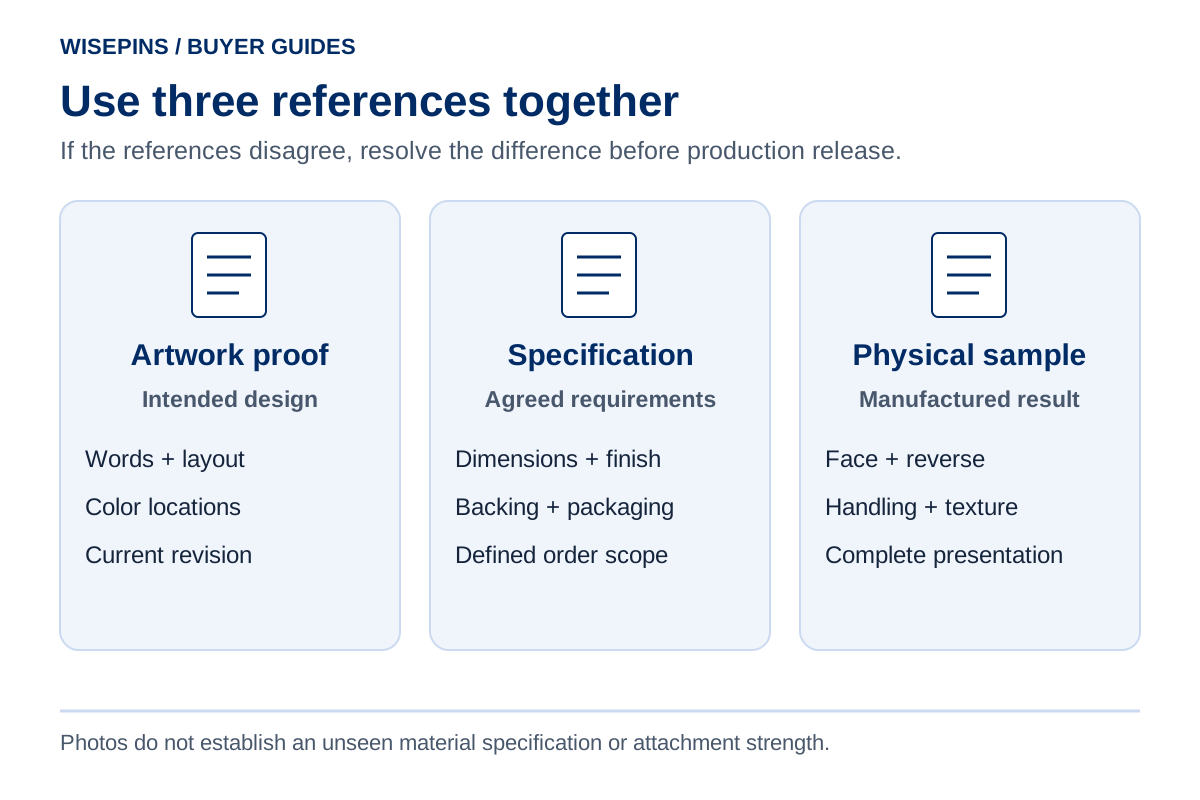
Work from three references at once:
- The current artwork file, clearly identified by revision.
- The agreed specification or order detail sheet.
- The sample being reviewed, including its reverse and any approved packaging.
If they disagree, resolve the disagreement. Do not assume that approving one silently updates the others. A sample might look attractive while containing an old year, and an accurate drawing may still leave an attachment position to be checked on the physical piece.
Inspect the Sample in a Repeatable Order
First view the whole badge as a wearer or recipient would see it. Then examine the details against the specification. This keeps the review connected to its actual purpose rather than judging only a highly enlarged photograph.
Use the table below as a working sheet. Add an observation and a decision for each relevant row. “Not checked” is more useful than leaving a blank that someone might interpret as approval.
| Area | Check on the actual sample | Record or clarify |
|---|---|---|
| Identity | Correct logo, text, date, rank or design variant | Exact artwork revision and variant name |
| Dimensions | Width and height in the agreed orientation | Units, measurement points and any agreed dimensional limits |
| Detail | Lettering, fine shapes, openings and separation of adjacent elements | Specific areas that need clarification or revision |
| Color | Correct color in each location, compared with the agreed reference | Color references and viewing conditions; unresolved differences |
| Surface | Intended enamel, printed or metal appearance; visible marks or unwanted areas | Location and nature of each concern, with photographs |
| Edges and reverse | Outline, reverse details and overall workmanship | Any unexpected feature or handling concern |
| Attachment | Type, quantity, position, orientation and normal opening/closing | Whether the sample uses the final proposed attachment |
| Packaging | Badge position, card text, closure and overall presentation | Packaging revision and any components not yet sampled |
Do not invent a general pass limit for scratches, dimensions, color difference or attachment strength. If a measurable acceptance requirement matters to the project, agree the requirement and an appropriate way to assess it with the supplier. A ruler check and ordinary handling do not constitute a certified performance test.
Review color under consistent conditions
For color review, keep the reference and sample under the same lighting and note the conditions. A photograph taken under another light may appear different without explaining why. If the result is unclear, describe the difference and discuss a suitable comparison rather than asking for “exactly the color on my phone.”
Know What Photos and Videos Can Prove
A clear front photo is useful for locating a missing letter, reversed color area or misplaced element. A rear photo helps show the attachment arrangement. Side and angled views can reveal features that a straight-on view hides.
Ask for views that answer a question: a rear view for attachment position, an angled view for surface appearance, or the complete packed badge for presentation. Identify which sample appears in the images. Photographs of different pieces should not be treated as one fully documented sample.
Remote evidence has limits. Screen settings, lighting, reflections, camera processing and scale can affect the appearance. A short video of an attachment opening does not establish a pull-strength rating or long-term durability. Photos cannot confirm an unseen material specification.
Where physical review matters, allow for sample delivery and internal approval. If a project uses remote approval, write down the evidence reviewed and the items it did not establish. Agree the approval route with the supplier; do not assume a general production photo service replaces the sample review needed for your order.
Send Actionable Revision Requests
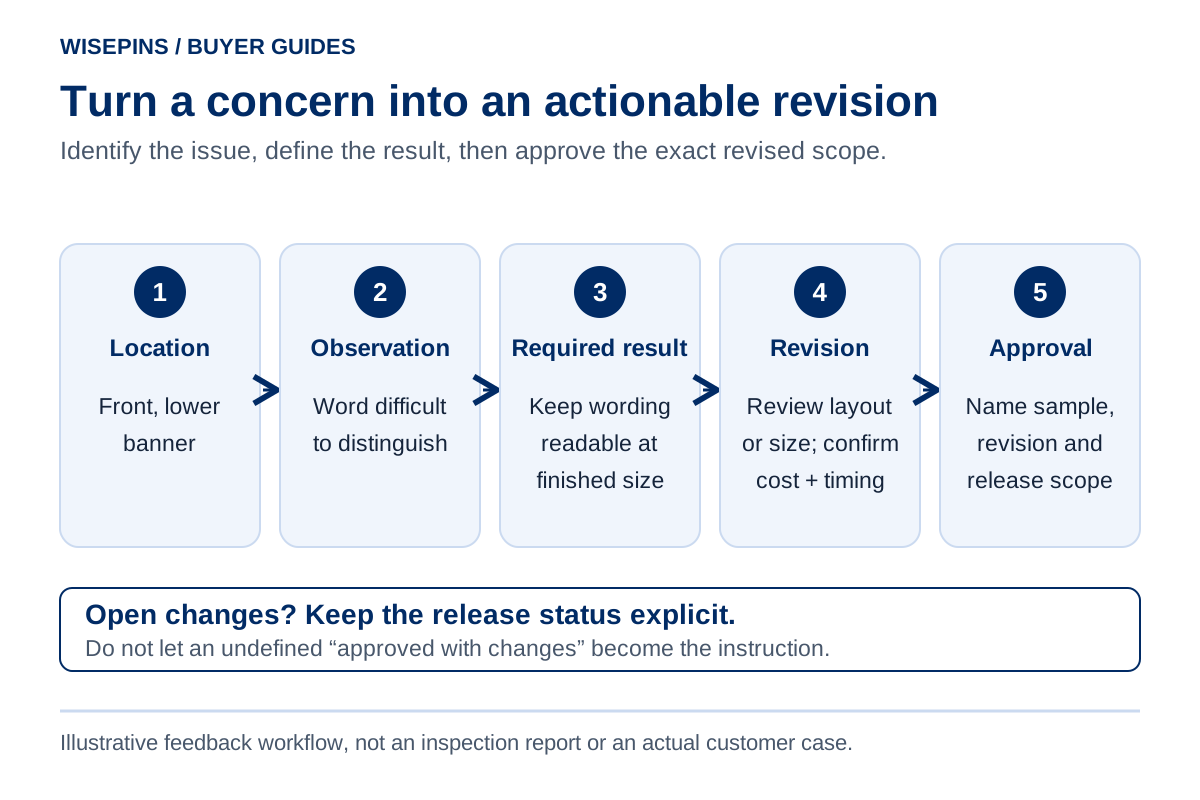
“Please improve the quality” gives the manufacturer very little to act on. A useful request identifies the location, the observed issue, the intended result and the reference to use.
Illustrative feedback record — not an actual customer case:
| Field | Example |
|---|---|
| Project and sample | Membership pin / sample S1 / artwork R3 |
| Location | Front, lower banner |
| Observation | The second word is difficult to distinguish at the finished size |
| Required outcome | Keep the approved wording readable; do not abbreviate it without approval |
| Requested next step | Suggest a layout or size adjustment and identify any cost or timing effect |
| Evidence | Annotated full view plus close-up of the same sample |
| Decision | Not approved for bulk production; revised proposal required |
Number multiple comments and send one consolidated list. Distinguish a manufacturing discrepancy from a new design preference. Changing the size after seeing a correctly made sample is a specification change; it may require different work from correcting a sample that does not match the agreed drawing.
After a revision, identify what must be reviewed again. An enlarged badge changes the overall dimensions, and a different attachment position may affect how it sits on the card. Confirm the revised sample or evidence needed before closing the comment.
Approve a Defined Version and Scope
Use a short written approval that another colleague could understand without reading the entire email chain. Reference the sample and specification, identify the approved design variants, and state the remaining conditions, if any.
Choose a decision that matches the evidence, then state the next action. The following labels are a suggested buyer workflow, not WisePins inspection grades or contractual acceptance terms.
| Review outcome | When to use it | What to communicate |
|---|---|---|
| Ready for production release | The required checks are complete, revisions are closed, and the sample and documents agree | Identify the final references and the exact designs and scope being released; obtain supplier confirmation of the next production step |
| Hold for missing evidence | An important item has not been checked, such as the final attachment or assembled package | Name the missing item, who will review it and what evidence is needed; keep production release pending |
| Revise and review again | The sample differs from the agreed requirement, or the buyer requests a specification change | List corrections and new preferences separately, request the proposed revision and its cost/timing effect, and define what needs another review |
A correct front design does not close a missing packaging check. Equally, an unchecked item is not automatically a defect: record it as unresolved so the next person knows what to do.
For example, an internal approval record could read:
Project: club membership pin. Physical sample S2 reviewed against artwork R4 and specification Rev B. Design, dimensions, front finish and attachment approved. Packaging card remains unapproved. Do not treat this message as release of the complete order; please confirm the remaining approval and production steps.
This is a suggested communication format, not an automatic instruction that a supplier can begin a partially approved order. If anything remains open, agree whether production is on hold and which activity, if any, is authorized. Avoid “approved with changes” when those changes have not been defined and reviewed.
For full release, list the final sample, artwork, specification and packaging references together. Name the person authorized to approve. Your own purchasing approval, deposit arrangements and supplier confirmation should align; sample approval alone does not answer every commercial question.
Treat Later Changes as New Decisions
Once approved, preserve the files and approval email in a shared project folder. Keeping a physical reference where practical can help your team discuss future orders, but agree separately whether and how the supplier retains a reference.
If you later change the backing, dimensions, finish, wording or packaging, describe the change against the approved version. Ask which prior approvals still apply, whether another sample is needed, and what happens to cost and timing. Do not label a changed design “same as approved” merely because the logo remains the same.
One approved sample also does not demonstrate that every bulk item will be identical. The order still needs agreed production requirements and checks. At WisePins, we produce against the approved sample and specifications and check colors and artwork, dimensions and appearance, backings, quantities and packaging. Problems found are addressed before shipment. See our production and delivery process for the scope described on this site.
Frequently Asked Questions
No. Artwork approval confirms the intended design and labeled specifications. A physical sample allows review of the manufactured piece. Identify both references and resolve any differences before giving production approval.
Photos can answer certain visual questions, but they do not reproduce every aspect of color, size, feel or attachment performance. Agree the review route for the project and explicitly record what was reviewed and what remains unverified.
Identify the sample and artwork revision, mark the location, describe the required result and ask for a proposed revision. Confirm its effect on the sample, price and schedule before approving the next step.
Sampling generally takes 10–15 days; projects requiring new mold development need approximately 10 additional days. Bulk production usually takes about 20–25 days, depending on specifications and the production schedule. Sample transit, your review, revisions and bulk shipping need separate planning. Confirm the schedule for your order.
WisePins quotes samples separately according to design, manufacturing method and quantity. An approved sample and specifications provide a production reference; they are not a zero-variation guarantee or proof of a completed bulk inspection. Confirm any additional acceptance or evidence requirements before ordering.
Prepare Your Sample Review Before Ordering
Send the artwork or idea you have, the intended use, quantity and destination, together with your approval questions. Include dimensions, finish and attachment preferences where already decided; the remaining specification can be discussed with us. Tell us who will review the sample and whether your team needs a physical piece before making its decision.
Explore sample development or contact WisePins at info@wisepins.com to discuss a sample for your design. Settle the reference and the approval scope before the bulk order begins.
Discuss Your Project